Agentic AI Was Built for Enterprise. Here's What SMBs Actually Need.
Cade Cunningham
Author
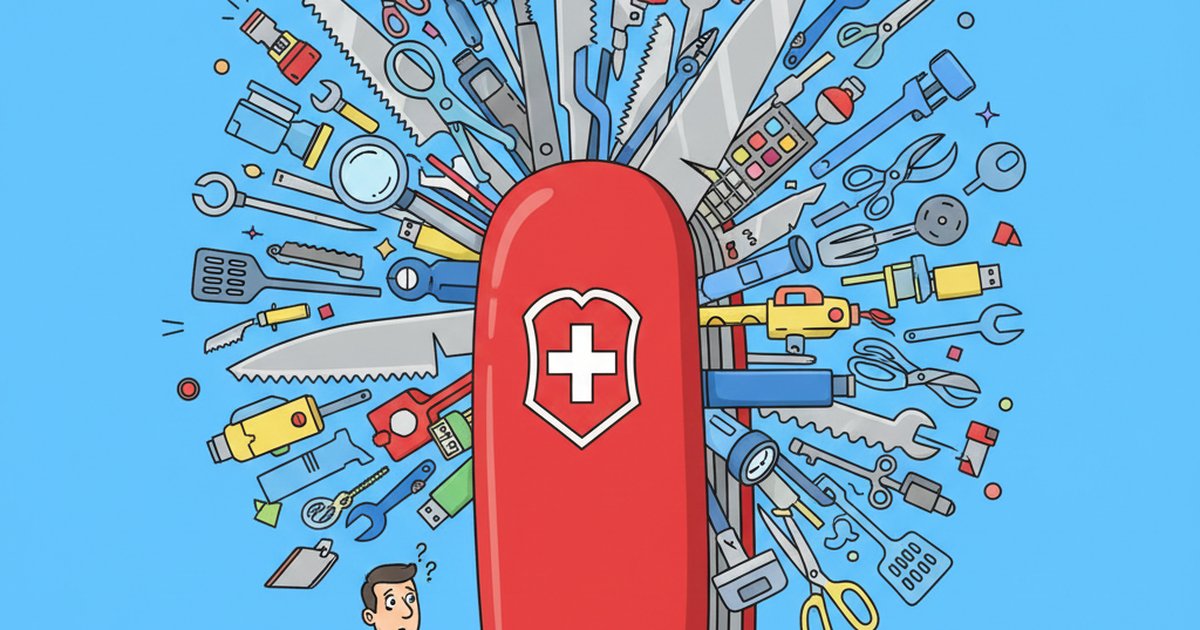
The agentic AI wave hit fast. OpenAI shipped Frontier on February 5th. Salesforce has been rolling out Agentforce since late 2024. Microsoft pushed Copilot Agents into Dynamics 365. Google launched Workspace Studio. And this week, the market wiped $285 billion off SaaS stocks. The entire tech industry is now aligned: 2026 is the year of agentic AI.
And it probably is. For Oracle. For Deloitte. For companies with 10,000 employees and a Chief AI Officer.
But I keep thinking about the 15-person plumbing company I talked to last month. They have 340 open quotes sitting in ServiceTitan right now. Nobody's following up on half of them. Not because they're lazy. Because the person who does follow-ups is also the person who answers the phones, schedules the techs, and handles billing disputes.
That company needs an agent. They just don't need the version that got announced at a keynote.
The agentic AI gap nobody's talking about
Here's what's actually happening. Every major platform is building agents for the enterprise buyer. Salesforce's Agentforce lives inside Salesforce. Microsoft's Copilot Agents live inside Dynamics 365. Google's agents live inside Workspace. These are agents designed for companies that already have six-figure platform contracts and dedicated IT teams to configure them.
Meanwhile, 60% of US small businesses are already using AI tools, doubled from 2023. They're using ChatGPT to write emails. They're using Claude to analyze spreadsheets. They figured out AI is useful. That part's done.
But autonomous AI workflows, agents that actually do things in your business without you babysitting them? That's where the gap is. Deloitte says multi-agent orchestration is "essential" but 70-80% of agentic initiatives haven't even made it to scale at the enterprise level. If enterprises can't figure this out, what chance does a roofing company with no IT department have?
And that's the actual problem. Not that small businesses don't need agents. They desperately do. It's that nobody built agents for how they actually work.
What agents look like when you have 12 employees
Enterprise agent platforms assume you have clean data, standardized processes, and someone whose full-time job is configuring software. Small businesses have none of that.
A real small business runs on a combination of a CRM they half-use, QuickBooks, a shared Google Drive, text messages, and whatever the owner remembers from yesterday. The data isn't centralized. The processes aren't documented. Half the institutional knowledge lives in one person's head.
So when Salesforce says "deploy an agent inside your CRM," that sounds great. But the plumbing company's CRM has duplicate records, missing fields, and three years of leads that were never marked closed-lost. The agent would be operating on garbage. I wrote about this a few weeks ago. Most AI investments fail because the data isn't ready, not because the AI isn't smart enough.
What small businesses actually need is something different. They need agents that connect to the tools they already use, pull data from multiple places, and start working without a six-month implementation. An agent that follows up on open quotes by checking ServiceTitan, referencing the customer's history in the CRM, and sending a personalized text. Not because someone built a custom workflow. Because the agent understands how a service business operates.
The SaaSpocalypse makes this urgent
There's a bigger shift happening underneath all the agentic AI announcements. This week, the market wiped $285 billion off SaaS companies after Anthropic's Claude Cowork demo showed AI doing the work that entire software categories were built for. The "SaaSpocalypse," people are calling it.
And it makes sense. If an AI agent can manage your pipeline, why do you need a $150/seat CRM? If an agent can reconcile your books, why do you need expensive accounting add-ons? The logic tracks.
But here's what gets lost in that conversation. Agents don't replace tools. Not yet, anyway. They orchestrate them. Your plumbing company isn't going to stop using ServiceTitan. Your marketing agency isn't going to ditch HubSpot. Those tools have years of data in them. What changes is that agents sit on top, connecting those tools into something that actually functions as a system instead of a pile of disconnected subscriptions.
I've talked about this before. The answer isn't more automations bolted onto more tools. It's an intelligence layer that makes your existing tools work together. That's what agents should be doing for small businesses.
The skills gap is the real blocker
51% of small businesses say employee resistance is their biggest barrier to AI adoption. Not cost. Not skepticism about whether AI works. Their people don't know how to use it.
And yeah, that makes sense. Enterprise agentic platforms are complicated. You need to define agent roles, configure tool access, set guardrails, build evaluation frameworks. That's fine when you have a team for it. When your "IT department" is whoever's youngest in the office, it's a non-starter.
This is why I wrote about agents being commodities. The agent architecture isn't the hard part anymore. Everyone has access to the same models, the same tool-calling patterns, the same orchestration frameworks. What matters is packaging that into something a business owner can actually use without becoming a prompt engineer.
The agents that win for SMBs won't be the ones with the most sophisticated architecture. They'll be the ones where you connect your tools and the agent just starts working. Like, you connect your CRM and your email, and the SDR agent starts identifying which leads need follow-up and drafts the messages. You don't configure it. You don't train it. It already knows what an SDR does because the skill was built by people who understand sales development.
Multi-agent systems, but make it practical
Salesforce predicts a 67% increase in AI agent adoption by 2027. And most of that conversation is about multi-agent systems. Agents that hand off to other agents. Agents that collaborate. Agents that specialize.
The concept is right. A single general-purpose agent is mediocre at everything. You want an SDR agent that's specifically good at sales development. A finance agent that understands cash flow. A marketing agent that knows content strategy. Specialized agents, working together.
But the enterprise version of this is insane for small businesses. You're supposed to define agent roles, map out orchestration flows, configure handoff protocols? That's a consulting engagement. That's what got us to the point where business owners need an AI COO just to keep track of what their tools are doing.
What SMBs need is multi-agent systems that are pre-built for how their business actually runs. An SDR agent that qualifies leads, a marketing agent that writes campaigns based on what the SDR is seeing, an operations agent that flags bottlenecks in fulfillment, a finance agent that tracks cash flow across all your accounts. All talking to each other. All connected to your existing tools through integrations that already exist.
That's what we built at Liaison. Not a platform where you build your own agents. A platform where specialized agents already understand your business type and start working the day you connect your tools. Direct integrations we built and maintain ourselves. No custom configuration. The agents load skills specific to your industry, whether you're a home services company, a marketing agency, or a law firm.
The real test for agentic AI
2026 will be remembered as the year agentic AI went mainstream. But "mainstream" for who?
If it's mainstream for enterprises with seven-figure AI budgets, that's nice. But there are 33 million small businesses in the US. They employ almost half the workforce. And right now, the agentic AI conversation is happening over their heads.
The real test isn't whether agents can orchestrate enterprise workflows. It's whether agents can follow up on 340 open quotes for a plumbing company that doesn't have time to configure software. Whether they can draft marketing emails for a 10-person agency that can't afford a full-time copywriter. Whether they can flag a cash flow problem three weeks before it becomes a crisis at a company where the owner is also the CFO.
That's what agentic AI should mean for small businesses. Not another platform to configure. Not another consulting engagement. Agents that know your business, connect to your tools, and do the work.
If that sounds like what you've been looking for, let's talk about it.
Share this article
Related Articles

The Best AI for Small Business in 2026, Sorted by the Job You Need Done
So "best AI for small business" has become one of the fastest-growing searches out there this year. Here is how I would sort it: by the job you need done, with real prices and where each kind of tool stops, including ours.

The Efficiency Is in Your Role, Not Your Vertical
So Avoca is booking a billion dollars of trade jobs over the phone, and that's real. But it's built for one function in one industry, and your job as the owner is every function at once. That's where the efficiency actually is, and nobody was building for it.

Instinct, Town and Grok Bot Are All Task Assistants. Liaison Is the Digital Version of You.
So 20VC is calling it the $100 billion race between Town, Instinct and Grok Bot, and they are all doing one job. None of them builds a context layer over your business, they rent your inbox. And Grok Bot can only ever be Grok, which is a real problem if what you are selling is an outcome.